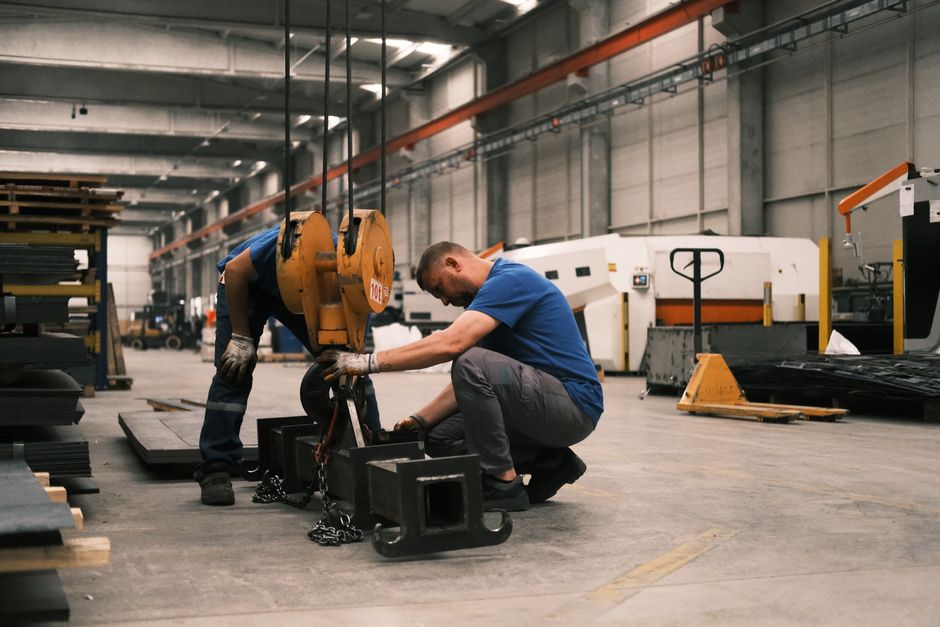
Safe manual handling techniques pros use on clearances
If you have ever watched a clearance job unfold in a tight hallway, up a flight of stairs, or through a cluttered loft, you will know the awkward bit is not always the rubbish itself. It is the lifting, turning, carrying, and placing. That is where safe manual handling techniques pros use on clearances make all the difference. Done properly, they protect people, reduce damage, and keep the whole job moving without that tense, shoulder-braced scramble we have all seen once or twice.
In this guide, we will break down what the professionals actually do, why it matters, and how those methods apply to house clearances, office clearances, furniture removal, bulky waste collection, and the messy in-between jobs that do not fit neatly into a box. We will keep it practical. No fluff. Just the kind of clear, field-tested advice that helps you work smarter and safer.
Whether you are planning a one-off property clearance or simply want to understand what a decent team should be doing on site, this article will walk you through the steps, the risks, the tools, and the best practice that sits behind a safe, efficient lift.
Table of Contents
- Why safe manual handling matters on clearances
- How safe manual handling works in real clearance jobs
- Key benefits and practical advantages
- Who this is for and when it makes sense
- Step-by-step guidance for safer handling
- Expert tips for better results
- Common mistakes to avoid
- Tools, resources and recommendations
- Law, compliance, standards and best practice
- Methods and comparison table
- Case study or real-world example
- Practical checklist
- Conclusion
- Frequently asked questions
Why safe manual handling techniques pros use on clearances matters
Clearance work looks straightforward from the outside. Pick up item, move item, load item. Easy, right? Not quite. Real jobs involve unpredictable weight, sharp edges, awkward shapes, broken flooring, narrow stairs, poor lighting, and items that shift the moment you lift them. A wardrobe is never just a wardrobe when it is wedged under a low ceiling in a Victorian terrace. And a mattress that seems light at first can become a sail in a drafty hallway. Lovely.
The reason safe manual handling matters is simple: most clearance injuries do not happen because one item was impossible to move. They happen because the lift was rushed, poorly planned, or carried out with the wrong technique for the space. Back strain, finger injuries, crushed toes, slips, trips, and minor cuts are all common risks when people try to muscle through a clearance instead of managing it properly.
Pros treat manual handling as a planning task, not just a physical one. They look at the item, the route, the exit point, and the landing area before anyone lifts. That mindset is what separates a controlled clearance from a chaotic one. It also helps keep damage down on skirting boards, bannisters, walls, floors, and door frames, which is good for everyone involved.
Expert summary: safe manual handling on clearances is less about being strong and more about being deliberate. Good planning, stable footing, clear communication, and the right handling method usually beat brute force every time.
How safe manual handling techniques pros use on clearances works
At a basic level, safe handling works by reducing strain and reducing surprise. Clearance crews do this by breaking the task into small decisions. What is being moved? How heavy is it likely to be? Is it solid, hollow, brittle, greasy, wet, or unstable? Can it be dismantled? Can two people move it more safely than one? Could a trolley help? Would dragging it create a hazard?
Professionals also think in terms of load path. That means the full route from where an item sits to where it leaves the property and ends up on the vehicle. If any part of that route is awkward, they adjust before lifting. They might clear the floor first, remove loose rugs, open doors fully, protect corners, or reposition other waste to create a cleaner passage. Small actions, but they save a lot of strain. The job suddenly feels less like wrestling a sofa through a maze.
Good manual handling on clearances also relies on communication. Before a lift, the team agrees on who leads, who counts down, where to pause, and where to set the item down if something goes wrong. That is especially important with bulky items like beds, cabinets, white goods, and office furniture. A clear "ready, lift, move, stop" rhythm does more for safety than shouting over each other once the item is already half way down the stairs.
Another important part is body positioning. Pros keep the load close, maintain a stable base, bend the knees where appropriate, avoid twisting under load, and use smooth movements rather than jerking. They also know when not to lift at all. Sometimes the safest choice is to split the load, remove drawers, dismantle the item, or use a mechanical aid. Truth be told, the best manual handling move is often the one you do not need to make.
Key benefits and practical advantages
Safe handling techniques are not just about avoiding injury, though that is obviously the big one. They also make clearance work faster, cleaner, and easier to manage. A team that moves carefully usually finishes more smoothly because they spend less time recovering from mistakes, fixing damage, or redoing a blocked route.
- Lower injury risk: fewer strains, slips, and impact injuries on site.
- Less property damage: safer movement around doors, walls, floors, and stairwells.
- Better control of awkward loads: especially for furniture, appliances, and mixed waste.
- Improved efficiency: fewer delays caused by dropped items or blocked paths.
- More professional presentation: calm, controlled work feels reassuring to clients.
- Stronger teamwork: clear lifting routines make crews more coordinated.
There is also a commercial benefit. A team that handles jobs safely is better placed to quote accurately, complete more work consistently, and avoid the hidden cost of injury-related downtime. If you run or manage clearances, that is not a tiny detail. It is the difference between an operation that feels stable and one that feels one awkward sofa away from a headache.
For clients, the practical advantage is peace of mind. You can usually tell when a crew is working with care. They check the route. They protect the floor. They pause before a lift. They do not fling things about like they are late for a train at Waterloo.
Who this is for and when it makes sense
This approach is relevant to a lot of people, not just specialist clearance firms. If you are planning a domestic house clearance, managing an office move, clearing a probate property, or removing bulky waste from a flat, these techniques matter. They are especially useful when the job includes stairs, tight access, heavy furniture, or mixed waste that needs sorting as you go.
It also makes sense for landlords, estate managers, letting agents, facilities teams, and builders working on end-of-project clearance. If the job involves moving items through occupied or partially occupied spaces, careful manual handling is not optional. People are still living or working around the site. One sloppy lift can turn a routine job into a complaint, an injury, or both.
And if you are a homeowner trying to do the work yourself, this is for you as well. A DIY clearance can save money, yes, but only if it is done sensibly. The moment you start dragging a fridge down a narrow stairwell with no plan, the savings begin to evaporate. Fast.
In our experience, the highest-risk jobs are not always the biggest ones. They are the ones where people say, "It should be fine." That phrase has caused more trouble than it deserves.
Step-by-step guidance for safer handling
Below is a practical process pros use to reduce risk on clearances. It is not fancy. It just works.
- Inspect the item before touching it. Look for broken parts, hidden weight, loose glass, sharp edges, fluids, or snag points.
- Check the route. Note door widths, stairs, tight turns, low ceilings, wet surfaces, and trip hazards.
- Decide whether to dismantle. Shelves, table legs, bed frames, and cabinet doors often make more sense apart.
- Choose the right number of people. Two-person handling is often safer for bulky or awkward items, even when the item is not extremely heavy.
- Use suitable equipment. Trolleys, sack trucks, straps, sliders, and gloves all have a place when used correctly.
- Agree the lift command. One person should lead the movement so everyone acts together.
- Keep the load close and the pace controlled. No sudden twists, no rushing, no last-second direction changes.
- Set down safely. Do not drop the item and hope for the best. Lower it in a controlled way.
- Reset before the next move. Check footing, breathing, grip, and route. Then go again.
A useful habit is to pause for ten seconds before the first lift on any awkward clearance. That tiny pause gives you time to spot the one problem you might otherwise miss, like a loose threshold strip or a half-hidden cable. Small moment, big payoff.
What good posture really means on site
People often hear "use good posture" and stop listening because it sounds vague. Fair enough. In practice, good posture means keeping a balanced stance, avoiding overreach, and not twisting while holding weight. If you need to turn, move your feet. If you need to reach, move closer first. It is boring advice, but boring advice is often what keeps people upright.
Also, do not try to look heroic. That is a terrible manual handling strategy. Nobody gets a medal for lifting a wardrobe alone when two people and a proper route would have made it simple.
Expert tips for better results
Pros tend to pick up small habits that make a big difference over a full day. These are the little things that keep a clearance job smooth when fatigue starts creeping in around mid-afternoon, or when the second floor landing is just a bit too tight for comfort.
- Start with the heaviest or most awkward item only if the route is ready. Do not clear the space around it first, then forget the route still has a snag point.
- Use short carry distances wherever possible. Stage items in a safe holding area if the vehicle is not immediately accessible.
- Keep hands out of pinch points. Finger injuries often happen during set-down, not the lift itself.
- Test the balance of awkward items before committing. A slight tilt can tell you a lot.
- Protect your exits. Doorframes, corner protectors, and floor coverings are not overkill on delicate properties.
- Rotate demanding tasks. Repeating the same heavy lift all day wears people down.
- Communicate early if something feels off. A quick "hold on" is much better than pushing through a bad angle.
One of the best habits is knowing when to say no to a lift in its current form. That is not weakness. That is professional judgement. There is nothing glamorous about a back injury, and anyone who has had one will tell you the same thing with a grim face and no drama.
Another useful tip is to think about the noise of the job. A scraping sound under a heavy item usually means you are dragging, not carrying, and that may be fine for one surface but not another. Listen to the site. It tells you more than people think.
Common mistakes to avoid
Most handling mistakes are predictable. That is actually good news, because predictable mistakes are easier to stop. The problem is that people often repeat them because they are trying to save time. A minute saved on the lift can become an hour lost to damage, injury, or getting stuck in a doorway with half a wardrobe and a bad mood.
- Rushing the first lift: people move faster than the route allows.
- Ignoring the shape of the item: bulky and awkward is not the same as heavy, and both need different handling.
- Twisting under load: one of the most common causes of back trouble.
- Trying to carry too much at once: especially during mixed waste clearances.
- Failing to clear the route first: loose items on the floor are trip hazards waiting for a bad moment.
- Using damaged equipment: wobbly trolleys and frayed straps are not "good enough."
- Not wearing suitable PPE: gloves, footwear, and eye protection can matter more than people expect.
- Skipping communication: if one person thinks they are lifting and another thinks they are still repositioning, things go sideways quickly.
A very human mistake is underestimating the last 10 per cent of a job. People do the hard part well, then relax too early while carrying the item through the doorway or down the last few steps. That is exactly when people catch their foot or bang a shin. Annoying, and very common.
Tools, resources and recommendations
You do not need a warehouse full of kit to handle clearances safely, but a few sensible tools can change the whole feel of a job. The point is not to overcomplicate things. It is to reduce strain and make the item easier to control.
| Tool or method | Best for | Why pros use it |
|---|---|---|
| Two-person carry | Bulky furniture, awkward loads, stairs | Improves balance and reduces solo strain |
| Sack truck or trolley | Boxes, appliances, smaller heavy items | Turns a carry into a controlled roll |
| Furniture sliders | Heavy items on smooth floors | Reduces dragging friction and floor damage |
| Straps and lifting aids | Large or awkward items | Helps share load more evenly |
| Protective gloves | Sharp, dirty, rough, or splintered items | Improves grip and protects hands |
| Sturdy footwear | Any clearance job | Protects feet from dropped items and improves stability |
Gloves are useful, but they are not a magic shield. Better grip does not mean reckless lifting. Likewise, a trolley is brilliant on a clear route and awkward on a cluttered one. Use the tool that suits the space, not the other way round.
If you are handling specialist items such as fridges, mattresses, or heavy sofas, it is worth looking at the specific disposal route as well. Services like fridge disposal, mattress disposal, and sofa removal and collection are often planned around the item's weight, size, and handling risk, which is exactly how it should be.
For bigger jobs, teams often combine handling methods with broader clearance planning. That is where services such as house clearance, furniture removal and collection, and bulky waste collection can be helpful, because the workflow can be matched to the load rather than forcing everything into one approach.
Law, compliance, standards and best practice
Manual handling on clearances sits inside a wider duty of care. In the UK, employers and contractors are expected to assess risk, train workers appropriately, and reduce the chance of injury so far as is reasonably practicable. The exact obligations will depend on the job, the workplace, and the setting, but the principle is consistent: plan the task, reduce the risk, and do not rely on luck.
Best practice normally includes a basic risk assessment before work begins, especially where the load is heavy, awkward, brittle, contaminated, or likely to require teamwork. It also includes sensible supervision, suitable equipment, and a clear process for reporting hazards or near misses. If a property has poor access, broken steps, unstable flooring, or signs of damp, that should be noted before the lift starts. Not after.
Many clearance firms also maintain internal policies for health and safety, insurance, and quality control. That is a good sign. It suggests the operation has thought beyond the day's lift and into the wider risk picture. If you are comparing providers, it is reasonable to ask how they approach manual handling, what protective measures they use, and whether their team is briefed for the type of clearance you need.
For readers who want to understand the bigger picture, related pages such as health and safety policy, insurance and safety, and pricing and quotes can also help frame expectations before you book a job.
Methods and comparison table
Different clearances call for different handling approaches. The safest choice is usually the one that fits the item, the space, and the team size. Here is a simple comparison that shows how pros tend to decide.
| Method | Best used when | Main benefit | Main limitation |
|---|---|---|---|
| Single-person carry | Light, compact items with a clear route | Fast and simple | Higher strain if the item is awkward |
| Two-person carry | Bulky or unbalanced items | Better control and load sharing | Needs coordination |
| Trolley or sack truck | Level surfaces and stable items | Reduces lifting effort | Not ideal on stairs or rough ground |
| Dismantling first | Large furniture with tight access | Makes the load safer and lighter | Takes extra time and tools |
| Mechanical assistance | Very heavy or repetitive lifting | Best strain reduction | Requires suitable equipment and space |
The decision is rarely about one method being universally "best." It is about choosing the least risky method for this exact job. A sofa on a straight ground-floor route is a different animal from a wardrobe going down a narrow staircase in a terraced house. Same item category. Completely different handling problem.
Case study or real-world example
Imagine a typical flat clearance in London. The team arrives to find a fourth-floor walk-up, a bulky wardrobe, two bedside cabinets, a mattress, and mixed bagged waste in a narrow hallway. The temptation is to start moving immediately because the property looks simple at first glance. But the stairs are tight, the landings are shallow, and one corner has a low ceiling that catches the eye only when you are standing under it.
A careful team would not lift first. They would check the stairwell, remove loose items from the route, and decide whether the wardrobe should be dismantled before movement. In this kind of setting, dismantling can be the difference between a smooth job and a very undignified jam halfway down the stairs. The mattress might be moved separately so it does not block visibility. The cabinets could be wrapped or carried one at a time with a clear lead person at the front.
What changes the outcome is not heroic effort. It is sequencing. The team plans the route, protects the contact points, uses two-person lifting where needed, and avoids letting the pace outrun the space. By lunchtime, the job feels controlled rather than frantic. That matters because the second half of the day is where fatigue starts to creep in and mistakes tend to appear. You can almost feel it in the shoulders.
It is a very ordinary example, but that is the point. Safe manual handling is not mainly about extreme situations. It is about ordinary jobs done properly, day after day.
Practical checklist
Use this quick checklist before starting a clearance lift. It is simple, but it catches a lot of avoidable problems.
- Have I checked the item for damage, sharp edges, or loose parts?
- Is the route clear of trip hazards, cables, wet patches, and clutter?
- Do I need one person, two people, or a mechanical aid?
- Should the item be dismantled before moving?
- Are the doorways, stairs, and corners wide enough?
- Have we agreed who gives the lift command?
- Am I wearing suitable gloves and sturdy footwear?
- Is the load balanced and close to the body?
- Do we have a safe place to set the item down if needed?
- Have I paused long enough to spot the one thing that might go wrong?
Quick practical reminder: if the answer to more than one of those questions is "not really," stop and reset the plan. That is not delay. That is good work.
Conclusion
Safe manual handling on clearances is not about being overcautious. It is about doing the job properly so people stay safe, the property stays protected, and the work gets finished without avoidable drama. Pros succeed because they plan, communicate, and choose the simplest safe method for the load in front of them. That is the heart of it.
If you remember only one thing, make it this: move less with force and more with judgement. Clear the route, share the load, dismantle when needed, and never treat an awkward lift as something to rush through. The calm approach is usually the quickest in the end. Funny how that works.
Get a free quote today and see how much you can save.
And if you are comparing clearance options, it is worth understanding how different services are structured, from waste removal to property clearance, so you can choose the right fit instead of forcing a square job into a round one. That little bit of care at the start tends to pay off later.
Frequently Asked Questions
What are safe manual handling techniques in a clearance job?
They are the practical methods used to reduce injury and strain when moving items during a clearance. That usually includes planning the route, using two-person lifts where needed, keeping the load close, avoiding twisting, and using equipment such as trolleys or straps when appropriate.
Why is manual handling such a big issue on clearances?
Because clearance work often involves awkward, heavy, or unpredictable items in tight spaces. Stairs, narrow hallways, low ceilings, and clutter all increase the risk of strain or drops if the lift is not controlled properly.
Do I always need two people for heavy items?
Not always, but two people are often safer for bulky, unbalanced, or hard-to-see items. Even loads that are not extremely heavy can be awkward enough to justify a two-person carry, especially on stairs or around corners.
Should furniture be dismantled before moving it?
Often, yes. If an item is too bulky for the route, dismantling can make it much safer and easier to handle. Beds, wardrobes, and some tables are common examples where removing parts first saves time and reduces risk.
What PPE is useful for manual handling during clearances?
Sturdy footwear and protective gloves are the basics. Depending on the job, eye protection or other PPE may also be useful. The right kit depends on the risks present, such as broken glass, sharp edges, or dusty spaces.
What is the most common mistake people make?
Rushing. People often underestimate the route, lift before checking, or try to carry too much at once. That is where slips, strains, and damage usually happen. Slow is not always slow, if you know what I mean.
How do professionals handle awkward items like sofas or fridges?
They assess the route, decide whether the item needs two people, and often use specific removal methods for that item type. Sofas and fridges are usually handled differently from bagged waste because of their size, weight, and shape.
Are manual handling rules the same for domestic and commercial clearances?
The principles are the same, but the risks can differ. Commercial jobs may involve larger volumes, more people, or a busier environment, while domestic jobs often have tighter access and more fragile surroundings.
What should I do if an item feels too heavy once I start lifting it?
Stop if you can do so safely, set it down in a controlled way, and reassess. Never try to force the lift to finish if the balance feels wrong. It is better to reset than to push through and risk injury.
How can I make a clearance route safer before the team starts lifting?
Clear loose items, open doors fully, remove rugs or trip hazards, check lighting, and protect corners if needed. A prepared route makes every lift easier and usually speeds the whole job up.
What kind of clearance jobs most need careful manual handling?
Jobs with stairs, tight access, bulky furniture, hoarder conditions, probate clearances, loft clearances, and mixed waste all need extra attention. The more awkward the space, the more important the technique becomes.
Is there a legal requirement to assess manual handling risks?
In the UK, employers and contractors are generally expected to assess risk and take reasonable steps to reduce it. The details depend on the job and the setting, but safe planning and sensible controls are standard best practice.