Zero Waste Mag in London

Zero Waste Mag provides waste clearance in London with a practical focus on removing unwanted items, separating reusable materials where suitable, and helping households and businesses deal with cluttered spaces in a managed way. The service covers common clearances such as household furniture, bulky rubbish, mixed waste and room-by-room property clearance, giving customers a straightforward route from piled-up items to a cleared area without having to arrange the disposal themselves.
Our work is aimed at people who need clear, usable space again, whether that means a one-off collection after a tidy-up or a fuller clearance of a flat, house, loft, garage or office. We describe the main options clearly, so you can decide what kind of collection fits the job before you enquire. If you already know roughly what needs removing, that helps us keep the conversation focused.
For a quick first step, use this page to understand the main clearance types and choose the section that best matches your needs. If you are comparing options or planning a larger job, it is sensible to gather the key details first. Then you can request a quotation with confidence and avoid paying for the wrong scope.
Household waste clearance and general rubbish removal
Domestic waste clearance is often the simplest way to deal with items that are too bulky, too mixed or too awkward for normal bin collection. That can include general rubbish from a clear-out, bags of unwanted household waste, broken household goods, and mixed items that need sorting before disposal. A clear structure matters because not every pile is the same: some loads are mostly recyclables, some contain bulky furniture, and some are a blend of both. Matching the collection to the contents helps keep the job efficient and tidy.
We also handle property-based clearances where the waste is spread across several rooms rather than gathered in one place. In those cases, the aim is not just removal but sensible separation of items that can be collected, recycled or passed through a suitable route. The exact approach depends on access, volume and the type of material involved. If your waste is mixed with usable belongings, it is worth identifying what should stay on site before the collection begins.
Common domestic jobs include:
- bagged household rubbish and loose domestic waste
- mixed bulky items from a general clear-out
- unwanted contents from a spare room or storage area
- miscellaneous items that do not fit standard bin services
Furniture, bulky items and room clearance

Bulky waste removal is a key part of the service because large items are often the hardest to shift safely. Sofas, wardrobes, tables, chairs and similar pieces need more than a simple bagged collection, especially when stairs, narrow hallways or shared entrances are involved. A planned approach reduces disruption and helps make sure items are removed without damaging walls, floors or door frames. Good handling matters as much as speed.
Room clearances are useful when furniture and loose items have built up together. Instead of dealing with one object at a time, the collection can cover a full room or a sequence of spaces, making it easier to clear an area ready for cleaning, decorating or practical use. That said, not every item should be treated the same way; some pieces may be reusable, while others are better processed as waste. A sensible quotation reflects the actual mix.
If you are planning this kind of work, it helps to think about how the items move through the property. Narrow stairs, lifts, shared entrances and long carries can all affect how the collection is organised. The more clearly the contents are described, the easier it is to match the right team and equipment to the job. You do not need to overstate anything; a concise list is usually enough.
House, flat and property clearance
Property clearance is designed for more substantial jobs where the contents of a home, flat or managed property need to be removed in a structured way. This can involve a full clearance of rooms and storage areas, or a partial clearance focused on certain categories of item. The service is especially useful when a property contains a mixture of furniture, general rubbish, white goods and odds and ends that need sorting before the space can be handed over, cleaned or refurbished.
Because property clearance often involves more than one type of material, it helps to separate what should be taken from what should remain. A clear brief supports a better quote and avoids confusion on the day. Where there are items you would like to keep, it is wise to set them aside or mark them clearly. That makes the removal easier to manage and keeps the work focused on the right rooms and contents.
For larger properties, the practical questions are usually volume, access and item type. A small number of bulky pieces is very different from a full contents clearance, and a flat with limited parking or difficult access needs different planning from a ground-floor property. If you are unsure which category fits, describe the space rather than trying to guess the service name. We can then advise on the most suitable clearance route.
Specialist disposal for fridges, mattresses and white goods
Some household items need specific disposal arrangements because of their size, materials or handling requirements. Fridge disposal, mattress removal and the collection of other white goods are common examples. These items are often awkward to move and may not belong in a general mixed-waste load if they need to be separated first. Planning the collection correctly helps the job run neatly and avoids turning a simple removal into a messy mixed pile.
White goods can include items such as washing machines or similar appliances, while mattresses and bed disposal usually need careful handling because of their bulk and shape. The service is useful when one large item is causing the main problem, but it also works as part of a wider household or property clearance. In many cases the most practical approach is to combine individual item removal with the general waste already being cleared from the same property.
When asking for a quotation, it is helpful to note whether the item is free-standing, built in, already disconnected or located in a difficult position. That is not about adding detail for its own sake; it is simply the information that allows the removal to be priced sensibly. If there are several heavy items in different rooms, listing them clearly is better than trying to describe the whole job in broad terms.
Garden, garage and loft clearances
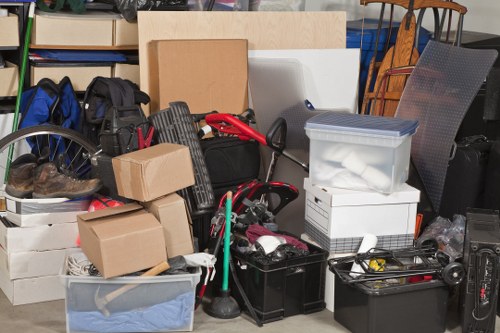
Storage and outdoor areas often fill gradually, which is why loft clearance, garage clearance and garden clearance can become significant jobs even when nothing has been thrown out all at once. These spaces may contain old tools, broken outdoor furniture, timber offcuts, bagged waste, boxes, and mixed items that have been left in place for years. A careful clearance can restore access and make the space easier to use again.
The main difference between these jobs is usually the material mix. A loft may contain lighter household goods and stored belongings; a garage may hold a larger range of tools, packaging and bulky items; a garden may include soil-related waste, general debris and outdoor clutter. Each one benefits from a practical sort-out before removal begins. If some objects are reusable or need to stay, it is best to separate them first so the collection focuses only on the unwanted material.
These clearances are often easier when access is straightforward and the contents are described in advance. A tidy inventory is useful, but it does not have to be complicated. Even a short note saying what is in the space can make the quotation more accurate. For mixed storage areas, we can then consider the right type of collection and whether any items need special handling.
Commercial waste, office clearance and business collections
Our commercial waste removal services support businesses that need unwanted items taken away from workplaces, retail spaces or shared premises. This includes office clearance work, commercial waste collection and disposal, and the removal of furniture or equipment that is no longer needed. Business jobs tend to rely on clear planning because there may be desks, chairs, archive materials, packaging and general refuse all in the same place. A structured collection keeps the process manageable.
Office clearance often involves more than emptying a room. You may need to remove old furniture, loose office items and mixed waste in a way that respects access routes, common areas and working schedules. Where items are being replaced, the clearance can support a handover, refurbishment or reduction in storage load. If a business wants to clear one room, several floors or a complete floorplate, the same principle applies: identify the contents accurately and remove only what is no longer required.
For larger workspaces, the best results usually come from clear separation of disposal categories. That might mean identifying office furniture, general rubbish, electrical items and archived material before the job starts. The service can then be organised around the practical outcome rather than a guess. Orderly planning matters here because business premises often need the clearance to be completed with minimum disruption.
Recycling, disposal choices and handling mixed loads

Different items call for different disposal choices, and that is why recycling, waste disposal and rubbish removal are often discussed together. A mixed load may contain recyclable material, reusable furniture, standard waste and objects that need special handling. The aim is to keep the process sensible rather than treating every item as identical. When items are separated properly, the collection is usually easier to plan and easier to explain in a quotation.
The practical question for customers is often whether the load is mostly one type of material or a blend of several. A load made up of cardboard, soft furnishings and broken household objects may need a different approach from a pile of one-off items or a single category of waste. We can help deal with both simple and mixed loads, but it is still useful to describe the contents honestly and clearly so the right method is chosen.
Useful points to mention when arranging mixed waste removal include:
- what the main item types are
- whether any pieces are especially heavy or awkward
- if the load is from one room or several
- whether there are items that should not be taken
Pricing factors and what affects a quotation
Quotation requests are easier to handle when they focus on the real shape of the job. The main factors are usually the volume of waste, the type of material, access to the property and whether the job involves a single item or a fuller clearance. Larger or more complicated collections naturally take more planning than a straightforward pickup, but there is no need to guess a category before you ask. A clear description is enough to get started.
It is also helpful to note whether the items are ready at the front of the property, spread through several rooms or still being gathered together. Access details matter because stairs, shared entrances and parking arrangements can influence how the collection is organised. If you have photographs or an item list, they can make the estimate more accurate, but a brief written summary is often enough to begin with. Please keep the description factual and concise.
Our advice is simple: state what needs removing, say where it is located and mention anything that could affect access. That gives a better basis for a quotation than broad phrases alone. If the job has several parts, list them separately. It is much easier to build an accurate price around a clear set of facts than around a general request for “some rubbish†or “a few itemsâ€.
About London
London is a large capital city built along the River Thames in south-east England, and its character comes from the layering of historic districts, new development and long-established civic institutions. The City of London, with its ancient street pattern and financial core, sits beside Westminster, where Parliament, royal ceremonial routes and many national museums and galleries are concentrated. Beyond the centre, the city expands through an intricate patchwork of boroughs, former villages and transport corridors that have been absorbed over centuries of growth. Its built environment ranges from medieval churches and Georgian terraces to Victorian railway architecture, interwar housing estates and contemporary towers. The Thames remains a defining feature, crossed by a wide range of bridges and lined in places by embankments, wharves and riverside paths. Green spaces also play a major role in the city’s identity: Hyde Park, Regent’s Park, Hampstead Heath and Richmond Park each offer a different landscape, while smaller commons, gardens and linear parks are woven into residential districts across the metropolis. Cultural life is similarly varied, with West End theatres, local arts venues, street markets, museums, libraries, football grounds and music spaces contributing to an environment that changes markedly from one neighbourhood to the next. London’s place history is visible in the names and street layouts of areas that were once separate settlements, from riverside hamlets and market towns to villages on the edge of the old city. Even now, the capital is less a single uniform centre than a collection of overlapping places, each with its own landmarks, civic buildings, transport links and everyday routines.
Clearance for probate, hoarded spaces and difficult properties

Some clearances are more sensitive or more complex than a standard rubbish removal. Probate clearance is one example, where contents may need to be removed carefully and with attention to what stays, what goes and what should be handled separately. Hoarder clearance is another, where the volume of material and the spread of items through a property can require a more patient and methodical approach. In both cases, clarity and discretion are important.
These jobs are often best approached room by room or section by section, because the contents may include a mixture of furniture, paperwork, general waste and long-stored belongings. A careful plan helps the clearance progress in a steady way without losing sight of items that need to be kept aside. If family members, executors or property managers are involved, it is useful to agree the main priorities before the removal begins so the work remains consistent.
Hoarded or probate-related properties can also contain difficult access points, fragile items or areas where sorting is needed before anything is taken away. That is why these services are not simply “bigger rubbish jobsâ€; they require considered handling and a clear brief. If you are preparing for this type of work, a plain explanation of the property and its contents is usually the best starting point.
Getting started with your waste clearance
If you are ready to move forward, start with the main item types and the space they are in. A short description is often enough to indicate whether you need household waste clearance, furniture removal, property clearance or a more specialised collection. That gives a practical foundation for the next step and keeps the process simple for everyone involved. The aim is to match the service to the job, not the other way round.
It can also help to decide whether the clearance is a single visit or part of a larger project. For example, a house might need a few bulky items removed now and a fuller room clearance later. A business might be replacing furniture before clearing old stock and equipment. By separating those parts in your mind, you can ask for the right scope at the outset rather than adjusting it afterwards.
To finish, send us a concise outline of the waste, the access and the location within the property, then request a quotation. If you are comparing a few options, keep this page open as a guide to the main service types. When you are ready, make the first enquiry in plain terms and we can help shape the clearance around what actually needs to go.