Recycling and Sustainability at Zero Waste Mag
 Zero Waste Mag is committed to driving local change through ambitious recycling and sustainability programs that align community action with measurable targets. Our metropolitan approach mixes borough-level waste separation policies with citywide campaigns to push for improved capture of dry recyclables, food scraps and bulky reuse items. We set a clear recycling percentage target to focus effort and measure progress, while promoting sustainable recycling and circular-economy thinking across neighborhoods.
We publish regular updates on the recycling target, aiming for a 65% household recycling rate within five years — a step-change compared with current averages in many districts. That figure represents a practical, data-driven milestone that draws on best practice from boroughs that already separate glass, paper, mixed plastics and organics at kerbside. To reach this 65% goal we combine policy advocacy with on-the-ground logistics improvements and transparent reporting.

Local transfer stations and collection hubs
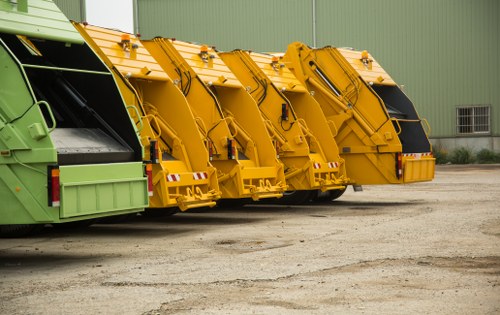
Our network of transfer stations plays a central role in making waste recycling efficient and low-impact. Local transfer stations reduce haul distances, lower emissions and speed up the sorting pipeline for materials such as card, textiles and compostables. The boroughs' approach to waste separation — often a three- or four-stream system for residual waste, mixed recycling, food/organics and glass — feeds directly into these hubs, improving material quality and market value.We maintain partnerships with municipal authorities to ensure that transfer stations are sited with minimal community disruption and maximum connectivity to processing facilities. Low-carbon vans and consolidated routing from stations to processors reduce empty-mileage and improve fuel efficiency, supporting the broader goal of carbon-aware recycling services. Efficient transfer logistics are key to making recycling cost-effective and accessible for all residents.
Partnerships with charities and social enterprises
Collaboration with charities is central to our zero-waste model. We work with repair cafés, furniture reuse charities and textile recyclers that divert high-value items from the waste stream. These partnerships create jobs, support vulnerable communities and keep reusable goods in circulation. Our alliances prioritize charities that operate transparent sorting and resale channels so that donations truly extend product life cycles and reduce landfill dependency.To support these collaborations we maintain an active list of charity drop-off points and coordinated pickups, and we promote initiatives that pair municipal collection with third-sector redistribution. Strong charity partnerships also enable targeted collection of items like electricals, books and large appliances, increasing the overall waste recycling rate while ensuring materials return to productive use.
Low-carbon vans and greener collection fleets
Investment in low-carbon vans is one of our most visible sustainability commitments. Transitioning fleets to battery electric vehicles (BEVs) and hybrid models reduces tailpipe emissions from the entire collection chain. Vans optimized for modular loading, route planning and lightweight materials help lower operational emissions and improve service reliability. We highlight pilot projects where consolidated charity pickups are run by low-emission vehicles to amplify the impact. Integrating low-carbon vehicles with smart-route software cuts fuel use and improves timeliness, making it easier for households to participate in local recycling programs. Zero-waste recycling depends on dependable, low-impact logistics: more frequent, cleaner services increase resident compliance with separation rules and help reach borough recycling targets.
How communities can take part
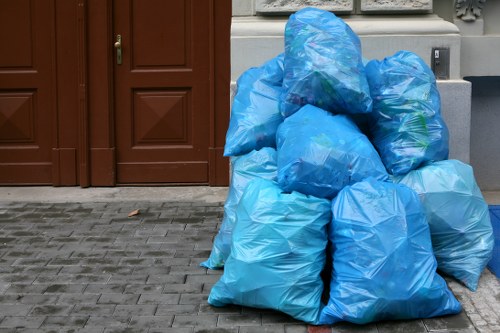
Everyone has a role in boosting municipal recycling outcomes. Start by checking your borough's separation guidance for organics, paper, glass and mixed plastics, then use local transfer stations and charity pickups for bulky items. Our recommended actions include:- Follow kerbside sorting rules to keep contamination rates low.
- Use local transfer stations to shorten transport legs and lower emissions.
- Donate reusable goods to trusted charities instead of discarding them.
- Support low-carbon collection by choosing services that use electric or hybrid vans.
Zero Waste Mag combines on-the-ground logistics, charity partnerships and clear recycling goals to accelerate the shift toward a circular, low-carbon future. By supporting borough-level separation schemes, investing in transfer infrastructure and switching to cleaner collection fleets, communities can build resilient systems that turn waste into resources. Our editorial coverage and data tracking will continue to highlight progress on recycling targets, successful reuse partnerships and innovations in fleet decarbonization, so that readers can see how sustainable recycling becomes everyday practice across neighborhoods.
